
Signs You Need Dryer Vent Cleaning in Buffalo, NY — Before the Fire Risk Escalates
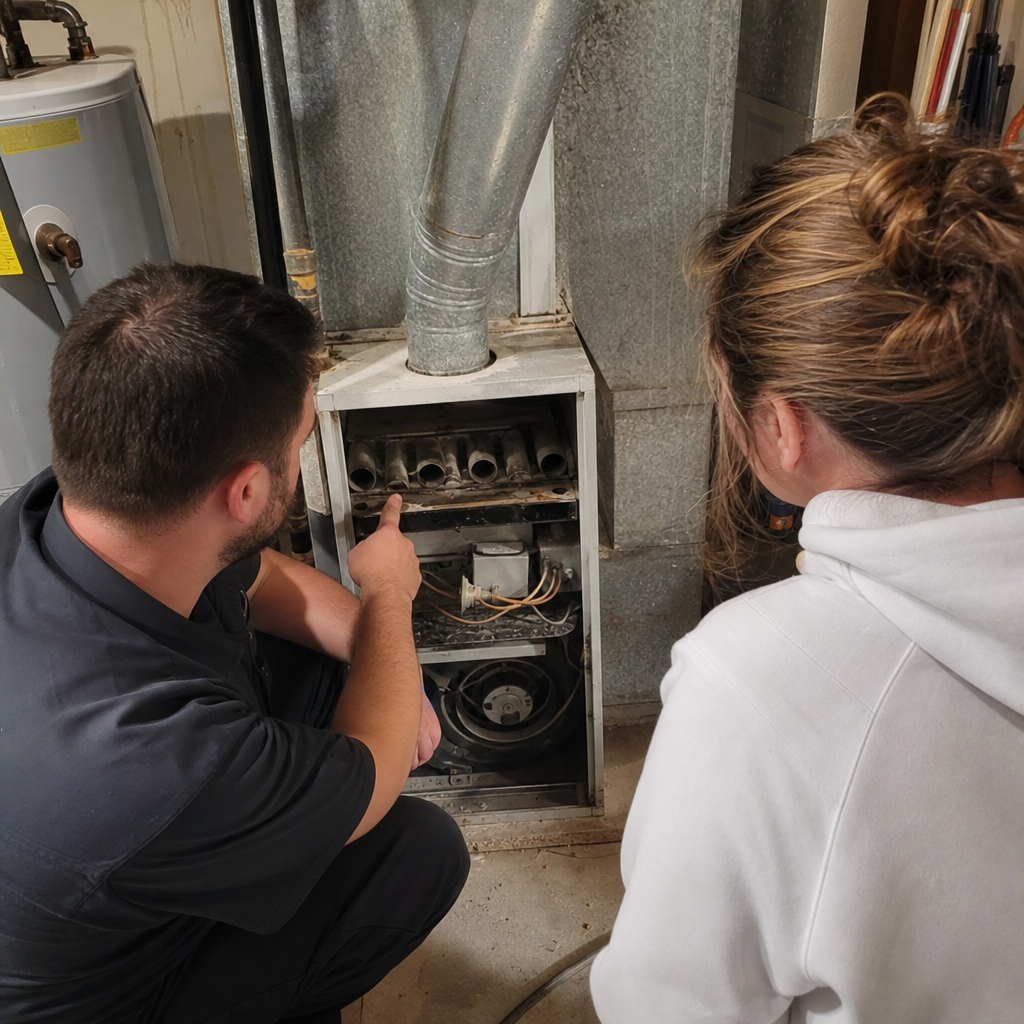
The clearest signs you need dryer vent cleaning are clothes that finish hot but still damp, weak airflow at your exterior vent hood, and rising humidity in your laundry room after each cycle. In Buffalo’s older housing stock, these early warnings often appear months before the classic symptoms — two-cycle drying times, a burning smell, or a machine that’s hot to the touch — because our retrofitted vent runs with multiple elbows and corrugated foil ducting trap lint gradually, not all at once. If you’re seeing any of these signals, or if it’s been over a year since your last cleaning in a pre-1980 Buffalo home, your vent is likely already partially restricted. Call Pinnacle Air Duct Cleaning Service Greater Buffalo at (855) 763-9868 for a free inspection and honest assessment.
Why Buffalo Homes Show Different Warning Signs Than the Standard List
By the time your dryer takes two cycles to dry a load, your vent has been partially blocked for a while. In an older Buffalo home where the vent runs 18 feet through two walls, “partially blocked” is a fire hazard, not a minor inconvenience.
Most online guides list the same three late-stage symptoms: long dry times, excessive heat on the dryer exterior, and a burning lint smell. Those are valid, but they’re also signs of dangerous restriction — the point where the U.S. Fire Administration notes dryer vents contribute to roughly 2,900 home fires annually. What those lists miss are the earlier indicators that appear while you can still prevent the escalation.
Buffalo’s housing stock makes this gap critical. Our city is overwhelmingly pre-1950 construction — Victorian, Colonial Revival, and early working-class homes in Allentown, South Buffalo, Black Rock, and Riverside that were originally heated by coal-fired boilers and steam radiators. Forced-air systems and dryer vents were retrofitted decades later, often routed through finished walls, around cast-iron radiator pipes, through bricked-up coal-chute spaces, and into closets with hand-cut openings. The resulting runs are longer, more convoluted, and harder to access than anything in modern construction.
Charles Rodriguez, Owner & Lead Technician at Pinnacle Air Duct Cleaning Service Greater Buffalo, encounters this weekly. “I’ve been in a lot of duct systems in this city. I’ll tell you exactly what’s in yours.” His crews — which means Charles himself on every job — regularly pull lint deposits from 90-degree elbows in Riverside homes where the vent hasn’t been touched in a decade, or from crushed foil accordion duct in Black Rock basements that was installed in the 1980s and forgotten.
The Early Warning Signs Buffalo Homeowners Should Actually Watch For
These symptoms precede the classic “danger list” by weeks or months. Catching them early matters more here because our extended heating season — furnaces running October through April or May, driven by persistent lake-effect cloud cover and snowfall — means windows stay sealed and a vent fire is hardest to detect early.
- Clothes are dry but unusually hot to the touch. When a vent is partially restricted, hot air backs up into the drum. The moisture escapes eventually, but the fabric absorbs excess heat. If you’re pulling out towels that feel like they’ve been in a warming drawer, restriction is building.
- The exterior vent hood flap moves weakly or irregularly. On a clear day in Buffalo, step outside during a dry cycle. The flap should lift steadily and stay open. If it flutters, barely lifts, or only opens partway, you’re not getting full exhaust flow. In winter, check that ice or snow isn’t blocking the hood — but if it’s clear and still weak, lint is the culprit.
- Humidity buildup in the laundry area after a cycle. A properly venting dryer pushes moist air outside. When restriction builds, that moisture leaks into the room. If your laundry area feels like a sauna after a normal load, or you’re noticing condensation on windows in that room, your vent isn’t exhausting fully.
- Longer dry times that you’ve normalized. “It’s always taken a while” is something Charles hears often in older Buffalo homes. But “always” usually means “since we moved in and didn’t know better.” Compare your current cycle time to your dryer’s manual specification. A 20% increase is restriction. A 50% increase is a hazard.
- Lint collecting behind the dryer or around the connection. If you see lint escaping at the back of the machine, the connection is loose, damaged, or the backpressure from restriction is forcing it out. Either way, the system isn’t sealed and isn’t venting properly.
These signs appear during partial restriction — the phase where cleaning restores full function without component stress. Wait for the burning smell or two-cycle drying, and you’re in late-stage blockage where the dryer is overheating, the thermal fuse is at risk, and the fire hazard is active.
Why Buffalo’s Housing Stock Creates Uniquely High-Risk Dryer Vent Scenarios
The physical construction of our vents compounds the problem faster than in newer markets. Here’s what Charles has documented across eight years of Buffalo jobs:
Long retrofitted runs through exterior brick walls. Modern homes typically have short, straight vent runs — 8 to 12 feet with one elbow. In Buffalo’s retrofitted housing, 18 to 25 feet with two or three 90-degree elbows is common. Each elbow reduces airflow efficiency and creates a lint trap point. The cumulative effect: a vent that needs cleaning twice as often as the manufacturer’s generic guidance suggests.
Foil accordion duct versus rigid metal. Foil flex duct was common in 1970s and 1980s retrofits because it was cheap and easy to snake through finished walls. But the corrugated interior catches lint at every ridge, and the thin material crushes at bends, further narrowing the passage. Standard cleaning tools — even professional-grade Rotobrush and Nikro equipment — struggle to fully clear crushed or kinked sections. Charles frequently recommends replacing accessible foil runs with rigid metal as part of the cleaning service, because cleaning alone won’t solve the underlying geometry.
Multiple 90-degree elbows in sequence. Dryer vent guidelines specify maximum equivalent length based on straight pipe plus penalty for each elbow. Two 90-degree elbows is the practical limit for most residential dryers. Charles has mapped vent runs in South Buffalo homes with four elbows routing around structural obstacles — equivalent length exceeding 60 feet. Those systems can’t achieve rated airflow even when clean, and they clog to dangerous levels in under a year.
Sections that have never been professionally accessed. In Allentown Victorians and Riverside duplexes, Charles finds vent runs that pass through wall cavities with no cleanout ports, no access panels, and no way to reach them without cutting drywall. Homeowners often don’t know these sections exist. The lint accumulates for years until the vent fails entirely.
The Seasonal Pattern That Accelerates Buffalo Dryer Vent Problems
There’s a rhythm to our calls that follows the lake-effect calendar. From November through March, when outdoor drying is impossible and furnaces run continuously, Buffalo homeowners operate dryers at peak frequency. The extended heating season — one of the longest continuous furnace-operating stretches in the continental U.S. — means windows stay sealed, indoor humidity is elevated, and any vent leakage dumps moisture into walls and framing where it can’t escape.
At the same time, Lake Erie’s proximity sustains elevated ambient humidity even in winter. That moisture raises the risk of mold colonization inside ductwork of older, under-insulated homes — a specific pairing of extreme heating-season length and lake-sourced moisture that shorter-season markets simply don’t match. When Charles pulls lint from a damp vent run in a Riverside bungalow, it’s often compacted and partially mold-stained from this humidity cycle.
The dangerous overlap: winter is when vent fires are most likely to spread undetected. Sealed windows mean no fresh air to dilute smoke, and the thermal mass of Buffalo’s heavy construction can contain and then suddenly release fire. The Dryer Vent Cleaning service Charles provides isn’t maintenance for maintenance’s sake — it’s hazard mitigation timed to our specific climate reality.
When to Schedule Cleaning Regardless of Symptoms
Charles gives Buffalo homeowners a clear action threshold: if it’s been more than a year since your last professional cleaning and you live in a pre-1980 home with an unknown vent run length, schedule an inspection regardless of whether you’re seeing warning signs. The absence of symptoms doesn’t mean the vent is clear — it means the restriction hasn’t reached the point where your dryer can’t compensate.
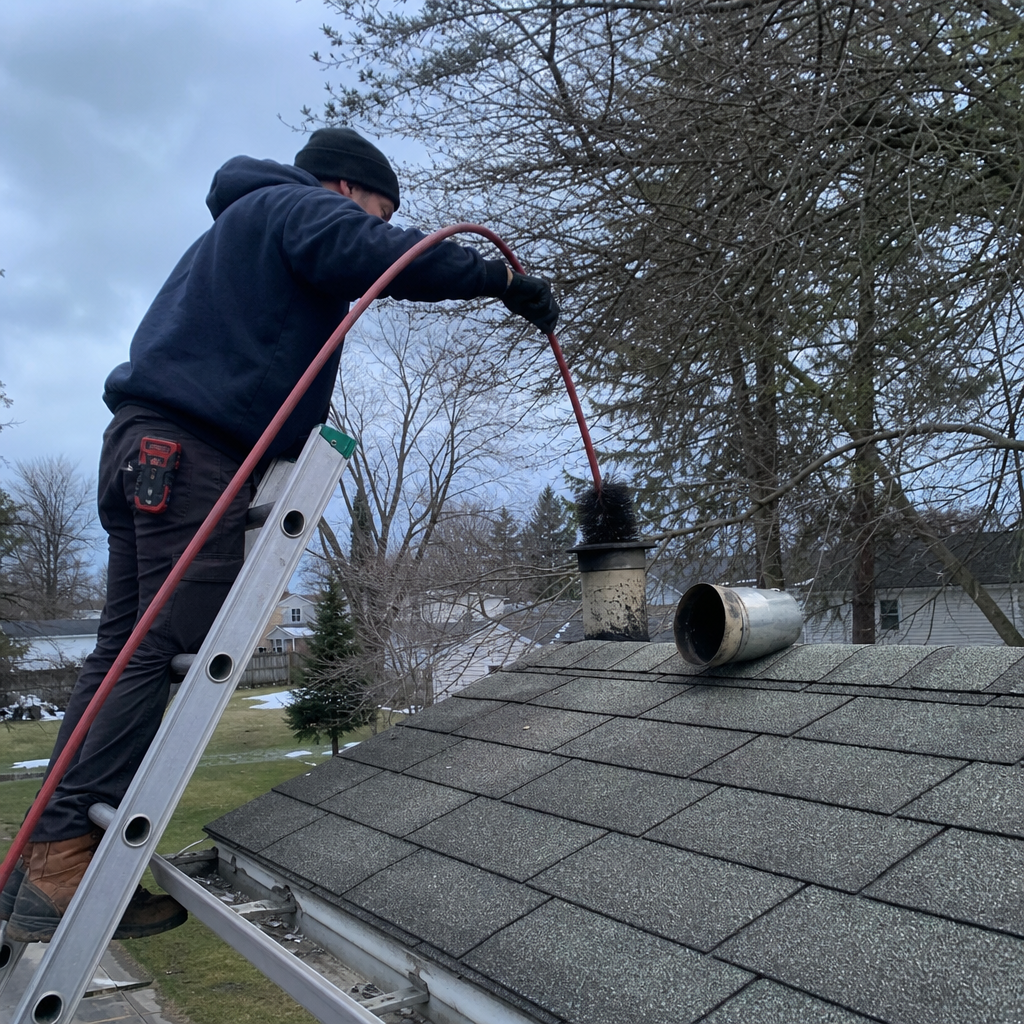
Professional-grade equipment makes the difference in these inspections. Pinnacle Air Duct Cleaning Service Greater Buffalo uses Rotobrush and Nikro systems — the same tools deployed by commercial IAQ contractors — with flexible shafts and camera capability that can map and clear runs standard shop vacuums can’t touch. For homeowners with Honeywell, Aprilaire, or Guardsman filtration systems already installed, this level of equipment compatibility ensures the vent cleaning doesn’t compromise the broader air quality investment.
The inspection itself is straightforward. Charles handles every job personally, so the assessment comes from eight years of focused duct and vent experience, not a checklist from a training manual. He’ll show you what the camera sees, explain whether cleaning or replacement is the right path, and quote upfront before any work begins. No upselling, no scare tactics — just what he’s actually found in your system and what it means.
What Professional Dryer Vent Cleaning in Buffalo Actually Involves
For homeowners who’ve never seen the process, here’s what thorough cleaning looks like with professional-grade equipment versus the rental-grade alternatives:
| Step | Professional Process (Pinnacle) | Typical DIY/Limitation |
|---|---|---|
| Inspection | Camera-mounted flexible shaft maps full run length, identifies blockages and duct condition | Visual check of accessible sections only; hidden elbows and wall cavities unexamined |
| Agitation | Rotobrush or Nikro rotary whip dislodges compacted lint from corrugated or rigid duct interior | Shop vacuum suction only; no mechanical agitation for adhered deposits |
| Extraction | High-CFM vacuum captures dislodged material at point of generation, preventing redistribution | Low suction, no containment; lint often pushed deeper or released into laundry area |
| Verification | Post-cleaning airflow measurement and camera confirmation of clear passage | No quantitative verification; “sounds better” is the typical standard |
| Repair/Upgrade | Replacement of damaged foil duct with rigid metal, proper sealing of joints, correction of crush points | Not performed; underlying problems remain and accelerate re-clogging |
The cost of professional cleaning in Buffalo typically ranges from $150 to $275 for standard residential vents, with complex retrofitted runs or multi-unit properties running higher based on access difficulty and length — see our full breakdown of How Much Does Dryer Vent Cleaning Cost? (2026 Price Guide) — Buffalo, NY. Compared to the $12,000 to $35,000 average cost of a dryer fire restoration, or the $400 to $800 for premature dryer replacement from overheating damage, scheduled cleaning is straightforward prevention.
FAQs
Age alone doesn’t restrict airflow — accumulated lint, crushed duct, or improper installation does. If your vent is more than 15 years old and has never been professionally cleaned, assume restriction until proven otherwise; schedule a camera inspection to distinguish between normal aging and active blockage. In Buffalo’s pre-1950 housing stock, “old” often means “retrofitted through walls never designed for it,” which compounds the problem. Call Pinnacle Air Duct Cleaning Service Greater Buffalo at (855) 763-9868 for a free inspection that’ll show you exactly what’s in there.
Cleaning is almost always the cheaper first step at $150–$275, but replacement of damaged sections — especially crushed foil accordion duct — is sometimes necessary for safe long-term operation. For homeowners seeking Affordable Dryer Vent Cleaning in Buffalo, NY, Charles Rodriguez evaluates each home individually. Charles Rodriguez evaluates each Buffalo home individually: if the duct is intact but lint-compacted, cleaning restores function; if it’s deteriorated, improperly routed, or made of unsafe material, he’ll recommend replacement with rigid metal and explain why. The worst outcome is paying for cleaning when the underlying duct geometry will re-clog in six months — something he flags upfront, not after the fact.
For Buffalo’s older homes with retrofitted vent runs, annually is the minimum; homes with multiple elbows, long runs through exterior walls, or heavy dryer usage should consider every six to eight months. The extended heating season and lake-effect humidity here accelerate buildup compared to drier, milder climates. If you’re unsure of your vent’s length or configuration — common in homes with finished basements or concealed runs — start with an inspection and let Charles establish a schedule based on what he finds.
You can clear lint from the accessible section behind your dryer and from the exterior hood, but you cannot safely or effectively clean the full run through walls without professional equipment — and in Buffalo’s older homes, that’s where the dangerous accumulation lives. The risk of damaging foil duct, pushing blockages deeper, or missing hidden elbows outweighs any savings. For the sections you can reach, a simple lint brush and vacuum attachment help between professional cleanings; for the full system, especially with Buffalo’s complex retrofitted runs, call a technician with camera inspection and rotary agitation capability. Pinnacle Air Duct Cleaning Service Greater Buffalo uses Rotobrush and Nikro systems for exactly this reason — professional-grade equipment, not rental-grade tools, for the job your house actually needs.
Don’t Wait for the Burning Smell
The standard warning lists aren’t wrong — they’re just late. In Buffalo’s older housing stock, with its long vent runs, multiple elbows, and decades of accumulated retrofit complexity, the early signs are subtler and the fire risk escalates faster once restriction passes the tipping point.
If you’re noticing hot clothes, weak exterior airflow, humidity in your laundry room, or if you simply can’t remember the last time your vent was professionally inspected, you’re in the window where cleaning prevents crisis. Charles Rodriguez handles every job personally, with eight years of focused air duct and vent experience, professional-grade Rotobrush and Nikro equipment, and the kind of post-job walkthrough where you’ll see exactly what came out of your system — a standard of work that has earned Pinnacle recognition for Best Dryer Vent Cleaning in Buffalo, NY.
If you’d rather have it looked at, Pinnacle Air Duct Cleaning Service Greater Buffalo offers a no-pressure assessment in Buffalo — call (855) 763-9868 for a free estimate and straight answers about what your vent actually needs.
Written by Charles Rodriguez, Owner & Lead Technician at Pinnacle Air Duct Cleaning Service Greater Buffalo, serving Buffalo, NY.