
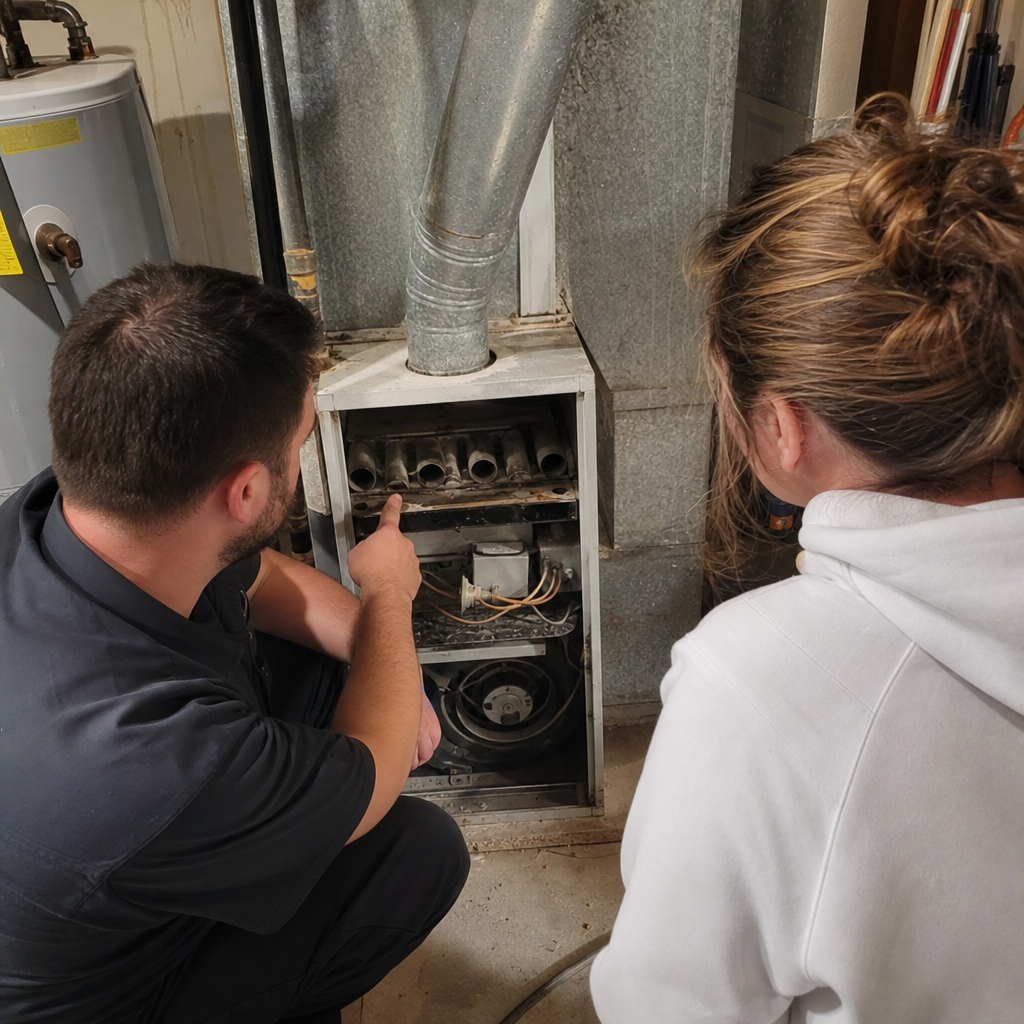
Is Air Duct Cleaning Worth It in Buffalo, NY? Here’s the Honest Answer
Yes — air duct cleaning is worth it for most Buffalo homeowners with pre-1950 housing stock, extended heating-season debris buildup, or visible mold concerns, though it’s often unnecessary for newer, well-sealed systems with consistent filter maintenance. The national debate misses Buffalo’s specific conditions: six-month furnace seasons, lake-effect humidity, and decades-old retrofit ductwork that most markets simply don’t have. Call (855) 763-9868 for a no-pressure assessment of whether your system actually needs it.
Why the National “Worth It” Debate Doesn’t Fit Buffalo
The EPA’s cautious stance on duct cleaning — that it shouldn’t be done routinely without a specific problem — gets misquoted as “don’t bother at all.” That’s not what they said. Their guidance was shaped by studies of newer homes in moderate climates with standard duct installations. Those aren’t the homes Charles Rodriguez climbs into in Black Rock, South Buffalo, or Allentown.
Buffalo’s lake-effect weather off Lake Erie drives a heating season that runs roughly October through late April or May. That’s one of the longest continuous furnace-operating stretches in the continental US. Your blower is pushing air through those ducts for six-plus months, and every hour of runtime deposits particulate that shorter-season markets accumulate in a fraction of the time. Meanwhile, Lake Erie’s proximity sustains elevated ambient humidity even in winter, raising mold colonization risk inside ductwork of older, under-insulated homes. Rochester, drawing from Lake Ontario under different moisture dynamics, doesn’t face this exact pairing.
We’ve pulled decades of compacted debris from duct runs in Riverside homes that were originally heated by coal, then retrofitted with forced air in the 1970s or 80s. Those ducts were routed around cast-iron radiator pipes, through bricked-up coal-chute spaces, and into closets with hand-cut openings — narrow, irregular runs with excessive joints that standard equipment often can’t reach. If you’ve never had them cleaned, or if the previous owner “had a guy” who only vacuumed the registers, the EPA’s “no routine cleaning” advice doesn’t apply to your situation.
Here’s what we’ve observed across 8 years of focused work in this market:
- HVAC service calls for coil fouling drop after thorough duct cleaning and sealing — the debris isn’t recirculating back to the air handler
- Homeowners with persistent allergy symptoms, especially during Buffalo’s heavy spring pollen and winter recirculation months, report measurable improvement when we’ve removed accumulated pet dander, dust mite debris, and mold spores
- Energy bills respond to duct sealing done during the same service — a benefit that cleaning alone doesn’t deliver, but that our full-scope approach captures
- Pre-sale inspections in neighborhoods like North Park and Parkside increasingly flag dirty ductwork as a condition item, making cleaning a transaction cost for sellers
When Duct Cleaning Delivers Real Value — and When It Doesn’t
We turn down work when it’s not justified. If you’ve got a 2015-or-newer system, sealed ductwork, and you’ve run MERV 11+ filters on schedule with no renovation, pets, or moisture issues, a routine cleaning may offer marginal benefit. We’ll tell you that. But Buffalo’s housing stock makes that profile rare.
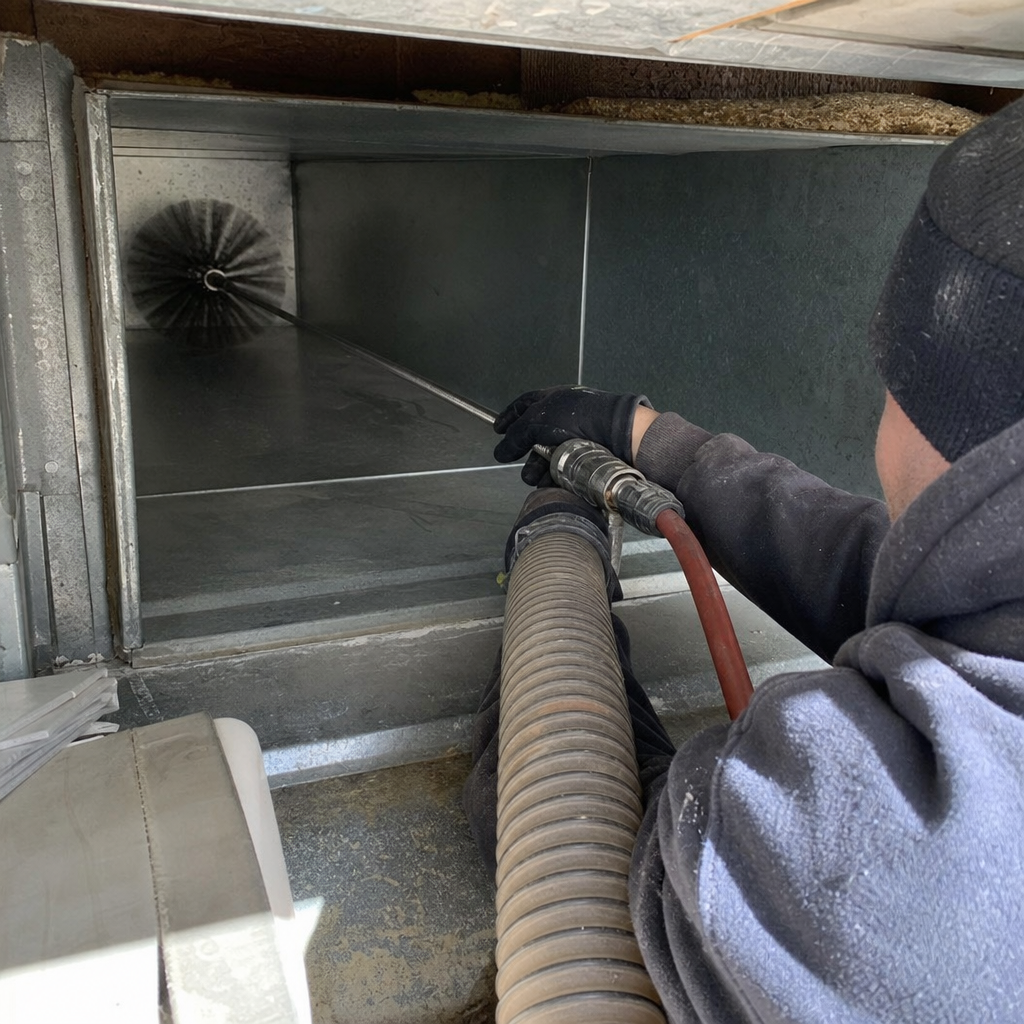
The “just change your filter” objection misses the mechanics. Filters intercept particles on their way back to the furnace. They don’t touch debris already coating duct walls or settled in horizontal runs where airflow velocity drops. That’s a different problem requiring different equipment — our Rotobrush and Abatement Technologies systems with HEPA containment, not your shop vac.
Conditions where cleaning is clearly worth the investment
| Condition | Why It Matters in Buffalo | Typical Outcome |
|---|---|---|
| No cleaning in 5+ years | Extended heating seasons compound annual debris; pre-1950 retrofit ducts trap more | Significant particulate removal; improved airflow |
| Visible mold or musty odor | Lake humidity + under-insulated ducts = condensation risk | Source removal + sanitizing; moisture investigation |
| Post-renovation | Sanding dust, drywall compound, insulation particles enter returns | Prevents continuous recirculation of construction debris |
| Persistent allergies/respiratory issues | Winter recirculation concentrates indoor allergens | Reduced symptom triggers for sensitive occupants |
| Evidence of pests | Rodents use ductwork in older homes with basement/crawl access | Removal of droppings, nesting material; sealing of entry points |
| Before/after duct sealing | Cleaning first prevents trapping debris in newly sealed system | Optimal efficiency gain from sealing investment |
Conditions where we’d question the value
- New construction with properly sealed ductwork and no occupancy yet
- Systems cleaned within 2-3 years with no intervening events
- Homes where the real issue is a failing HVAC component, not duct contamination
- Quotes based solely on “recommended every X years” without inspection
We use professional-grade equipment — Rotobrush contact cleaning for residential mains, Nikro and Abatement Technologies negative-air systems for heavier buildup or light-commercial jobs — because rental-grade tools don’t generate the suction or containment that Buffalo’s older, denser debris loads require. Charles handles every job personally, so the person who inspects your system is the same technician who’ll be crawling through it.
What Buffalo’s Housing Stock Means for Your Decision
Buffalo’s neighborhoods — Allentown, South Buffalo, Black Rock, Riverside, North Park, Parkside — are dense with Victorian, Colonial Revival, and early 20th-century working-class homes. These were built for coal-fired boilers and steam radiators. The forced-air ductwork came later, shoehorned through finished walls and spaces never designed for it.
That retrofit history creates specific problems:
- Dead-end sections: Ducts terminated in closets or awkward corners where standard straight-line tools can’t reach
- Excessive joints: Every splice is a debris trap and potential leak point
- Under-insulation: Condensation forms on cold duct surfaces in winter, binding dust into adhesive layers that resist light cleaning
- Never-serviced runs: We’ve found duct sections in 80-year-old homes that have never had professional attention since installation 40-50 years ago
These aren’t theoretical concerns. We’ve extracted material from Buffalo ducts that had compacted into something approaching felt — years of dust, skin cells, pet hair, and moisture-bound particulate that no filter change would dislodge. In lake-humidity conditions, that matrix supports mold and bacterial growth that circulates every time the blower cycles.
Our familiarity with Honeywell, Aprilaire, and Guardsman systems also matters for Buffalo homeowners who’ve invested in premium filtration or humidification. We don’t damage integrated components during cleaning, and we can spot when your ductwork is undermining equipment you already paid for.
What Does Air Duct Cleaning Actually Cost in Buffalo?
Pricing varies with system size, accessibility, and condition — there’s no honest flat rate for Buffalo’s irregular housing stock, so see our How Much Does Air Duct Cleaning Cost? (2026 Price Guide) — Buffalo, NY for typical ranges. After inspecting your specific duct configuration, we’ll quote exact pricing before starting work.
| Service Level | Scope | Typical Range |
|---|---|---|
| Standard residential cleaning | Supply and return ducts, registers, grilles, basic inspection | $350 – $650 |
| Deep cleaning with Rotobrush contact | Heavier buildup, older systems, includes HEPA containment | $550 – $950 |
| Cleaning + sanitizing | Antimicrobial application post-cleaning, recommended for mold/odor concerns | $150 – $300 additional |
| Duct sealing (Aeroseal or manual) | Leak sealing for efficiency, often paired with cleaning | $1,200 – $2,500 |
| Dryer vent cleaning | Separate service, critical for fire safety | $120 – $250 |
The “cheapest” quote in Buffalo often means a franchise crew with rental equipment, in and out in 90 minutes, no inspection of what they actually reached, which is why Affordable Air Duct Cleaning in Buffalo, NY still means thorough work. We’ve been called to re-clean after those jobs. Our 160 verified reviews averaging 4.9 stars reflect doing it once, correctly, with Charles on-site from arrival to final walkthrough.
Call (855) 763-9868 for an exact quote — estimates are free, and we’ll tell you honestly if your system doesn’t need service.
FAQs
No — the EPA does not recommend against duct cleaning when specific conditions like visible mold, heavy debris, or pest infestation exist. Their guidance cautions against routine cleaning as a preventive measure in systems with no problems, which is different from saying it’s worthless when real contamination is present. In Buffalo’s extended heating season with lake-effect humidity, “no visible problem” often masks significant buildup in inaccessible retrofit duct runs. Call (855) 763-9868 if you’re unsure whether your conditions warrant cleaning.
For most pre-1950 Buffalo homes with original retrofit ductwork, every 3-5 years is a reasonable interval given the six-month heating season and humidity exposure; see Whole House Air Duct Cleaning Cost in Buffalo, NY for full-system pricing. Newer, well-sealed systems with consistent filter maintenance may extend to 5-7 years. We’ve cleaned systems in South Buffalo and Riverside that hadn’t been touched in 20-plus years — the accumulation was substantial. The real answer depends on your home’s specific construction, occupancy, and events like renovations or water intrusion. Call (855) 763-9868 for a schedule tailored to your system.
Filter changes are essential but solve a different problem — they capture particles entering the return, not debris already adhered to duct walls or settled in low-velocity horizontal runs. In Buffalo’s older homes with irregular retrofit ductwork, significant buildup occurs in sections filters never contact. We recommend both: consistent filtration to reduce new deposition, and periodic cleaning to address accumulated material. For a system assessment that identifies where your specific debris loads are, call (855) 763-9868.
Cleaning alone typically produces modest efficiency gains — 5-10% in systems with heavy buildup. The larger savings come from duct sealing performed during the same service, which we’ve seen reduce heating costs substantially in Buffalo’s older homes with leaky, unsealed joints. Our full-scope approach addresses both contamination and leakage, which is why we offer Air Duct Cleaning combined with sealing and repair rather than surface-level vacuuming. For an estimate that includes efficiency projections for your home, call (855) 763-9868.
Our Honest Take, After Eight Years in Buffalo Duct Systems
I’ve been in a lot of duct systems in this city. I’ll tell you exactly what’s in yours.
Some don’t need cleaning. More do than their owners realize — especially in the neighborhoods where Buffalo’s housing stock and climate create conditions no national study accounted for. We’re not interested in selling you a service your system doesn’t need. We are interested in being the specialist you call when the conditions are real, the equipment matters, and you want the most experienced person in the company doing the actual work.
Charles handles every job personally. Our professional-grade equipment, not rental-grade tools, is specified for the debris density we encounter in Western New York’s older homes. Your air quality, start to finish — from inspection through cleaning, sealing, sanitizing, and the walkthrough where we show you what we found.
If you’d rather have it looked at, Pinnacle Air Duct Cleaning Service Greater Buffalo offers a no-pressure assessment in Buffalo — call (855) 763-9868.
Written by Charles Rodriguez, Owner & Lead Technician at Pinnacle Air Duct Cleaning Service Greater Buffalo, serving Buffalo, NY.