
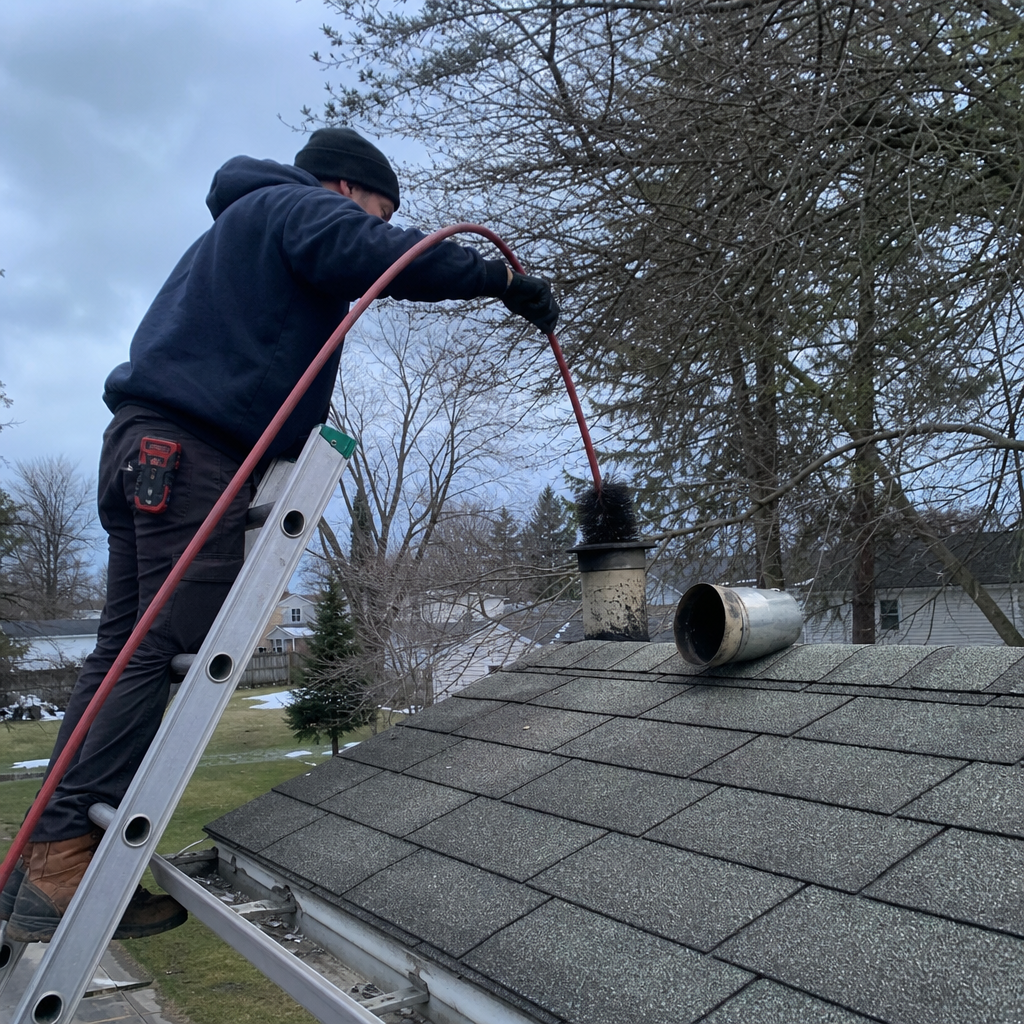
Fast, Reliable Dryer Vent Cleaning Across Boston
Dryer vent cleaning in Boston, NY typically costs $140–$280 for standard residential runs and $220–$380 for longer rural vent systems with agricultural debris buildup. Most Boston appointments are completed same-day in 60–90 minutes. Call (855) 763-9868 for a free estimate.
We’re the Dryer Vent Cleaning team that drives out to Boston Cross Road, Herman Hill, and the spread-out farm properties south of Buffalo knowing exactly what we’ll find: vent runs choked with a combination of household lint and field debris that suburban contractors rarely encounter. Charles handles every job personally, and after 8 years of focused indoor air quality work across Erie County’s rural snowbelt, we’ve learned that Boston’s agricultural setting and brutal heating season create dryer vent problems that demand more than a quick brush-and-vac. You need someone who shows up with professional-grade equipment, not rental-grade tools, and who won’t leave until the vent is genuinely clear — because a second trip costs you another morning of waiting.
Why Pinnacle Air Duct Cleaning Service Greater Buffalo Is Boston’s Preferred Dryer Vent Cleaning Company
Our 4.9-star average across 160 verified reviews includes homeowners from Boston and the surrounding townships who found us after franchise crews couldn’t solve their recurring lint problems. They kept calling because the dryer still took two cycles. We kept finding the real blockage: crop dust baked into hard deposits, or a sagging 30-foot vent run behind a barn-style workshop that the previous cleaner never inspected.
Charles Rodriguez drives to Boston himself — he’s the owner and lead technician on every job, not a dispatcher sending whichever crew member is available. That means the most experienced person in our company is the one crawling under your porch or on your roof to check the termination point. From Boston’s 14025 zip to the properties near Boston State Forest, we’re typically on-site within 24–48 hours of your call.
We know Boston’s housing stock intimately: the century-old farmhouses with original sheet-metal duct systems, the post-WWII ranches with additions that extended dryer vents through unconditioned crawlspaces, the newer builds on acreage with detached workshops where the previous owner ran a vent line that sags and collects lint in hidden low spots. This isn’t theoretical knowledge — it’s what we encounter weekly.
Our Dryer Vent Cleaning Services in Boston
Dryer Vent Inspection
Before we touch a brush, we run a camera and airflow test to map exactly what’s happening inside your vent. In Boston, this step is non-negotiable. We’ve inspected vents on Herman Hill properties where the homeowner assumed the problem was lint, only to find a partially collapsed section from decades of freeze-thaw stress — something no amount of cleaning would fix. Our inspection identifies agricultural debris loads, slope problems, damaged supports, and bird or rodent entry points that are epidemic in rural settings. You’ll see what we see, and we’ll explain whether cleaning, repair, or rerouting is the right call.
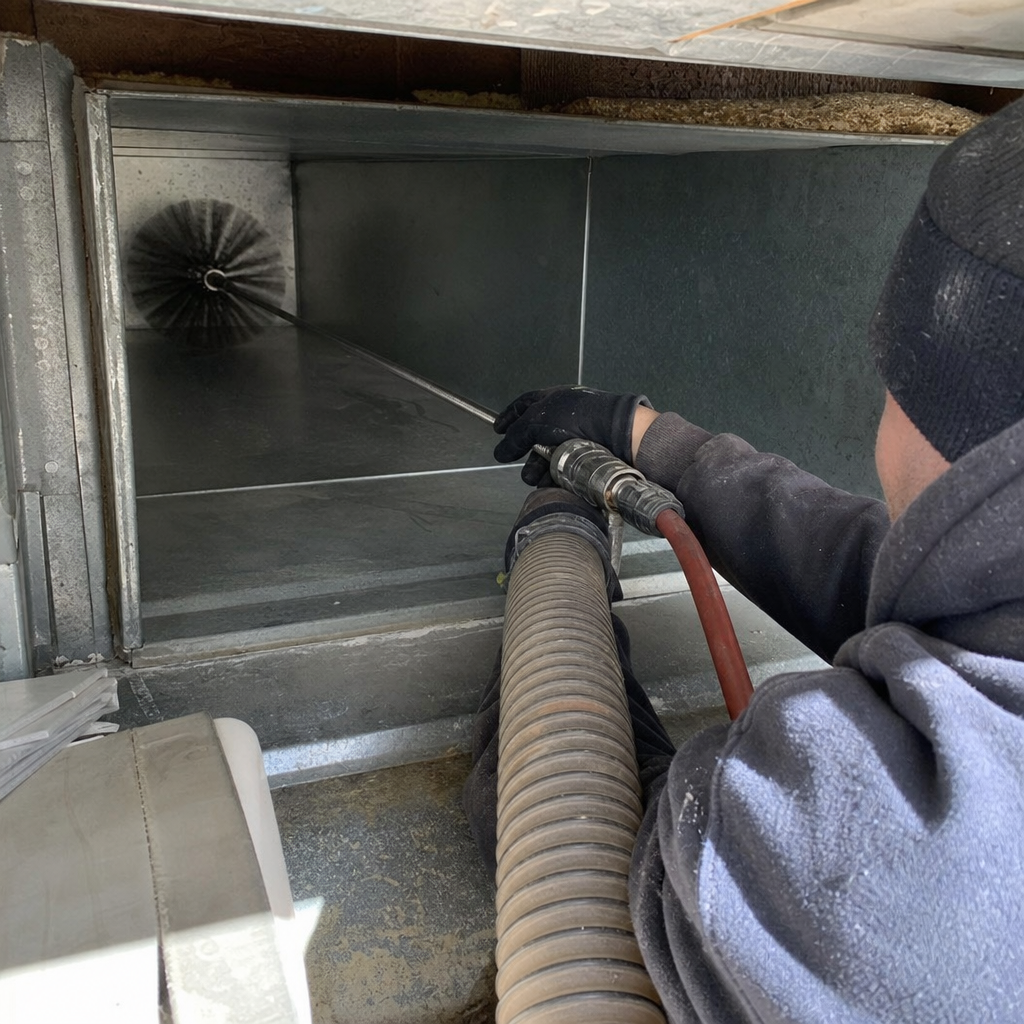
Vent Cleaning
This is where our equipment makes the difference. We use Rotobrush agitation systems paired with Nikro high-volume vacuums — the same setup commercial IAQ contractors deploy in industrial settings. For Boston’s toughest blockages, that combination matters. Standard brushes skim the surface of baked-on deposits; our system breaks them loose and extracts them completely. We serviced a century-old farmhouse on Boston Cross Road where the owner reported the dryer taking three cycles to dry a single load. Our tech found a Rotobrush kit couldn’t fully clear the line — a combination of caked-on lint blended with crop dust and a bird’s nest behind a damaged vent cap. We replaced the cap with a heavy-duty Guardsman bird guard and used our Nikro vac to clear the entire 40-foot run. The dryer now finishes in under 45 minutes.
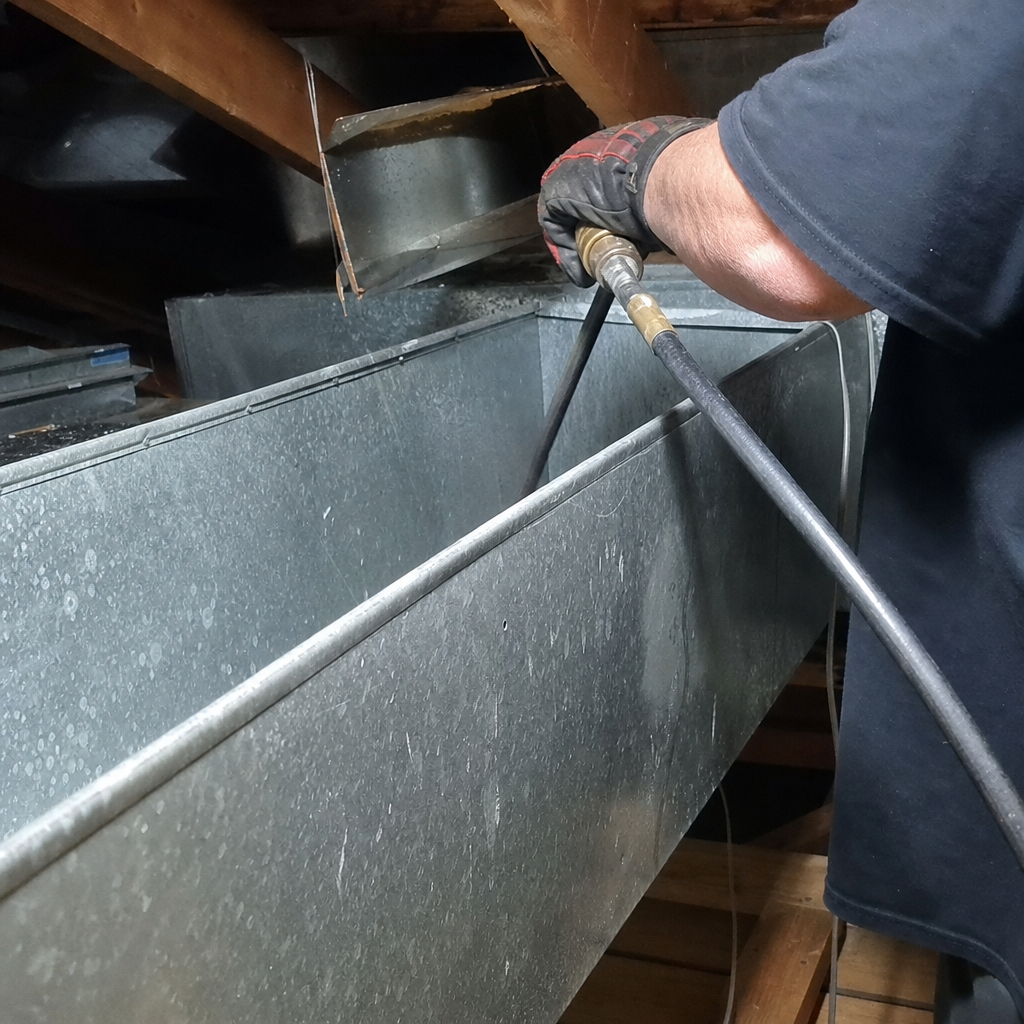
Lint Removal
Lint in Boston isn’t just lint. The agricultural fields surrounding properties along Boston Cross Road and throughout the town mean your dryer vent intake pulls in elevated loads of crop dust, field pollen, and organic particulates during the brief warm months. Once heating season locks the house up from October through late April, that material gets recirculated and baked into dense, resin-like deposits. Self-reliant homeowners in Boston attempt DIY cleaning but miss these hidden blockages, leading to restricted airflow and increased fire risk. One-trip professional service is essential for thoroughness — we extract everything, verify airflow at the termination, and show you the before-and-after.
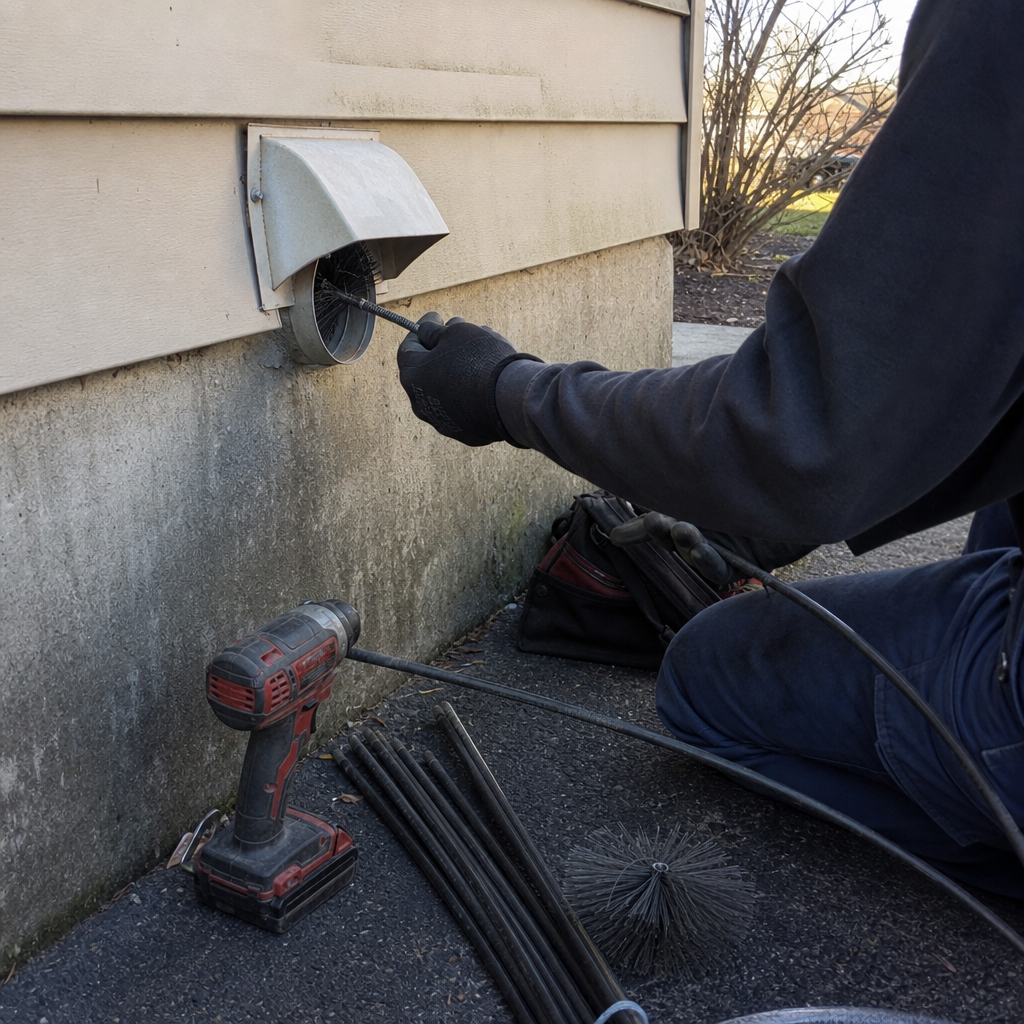
Vent Rerouting
Rural properties with detached workshops or oversized outbuildings often have longer, more complex vent runs that lack proper support or slope. We’ve rerouted vents on Boston properties where the original line dipped behind a workshop foundation, creating a permanent lint trap that no cleaning could permanently solve. Our reroutes use proper gauge material, correct slope for gravity drainage, and strategic support brackets — done once, done right. Charles handles the layout personally, measuring for minimal bends and maximum airflow efficiency.
Bird Guard Installation
Boston’s mix of open agricultural land and mature tree lines makes bird and rodent intrusion a constant threat. We install heavy-duty bird guards that stop entry without restricting exhaust flow — critical for preventing nests that can completely block a vent and create serious fire hazards. The Guardsman units we prefer stand up to Erie County weather and don’t clog with frost the way cheaper screens do.
Vent Cap Replacement
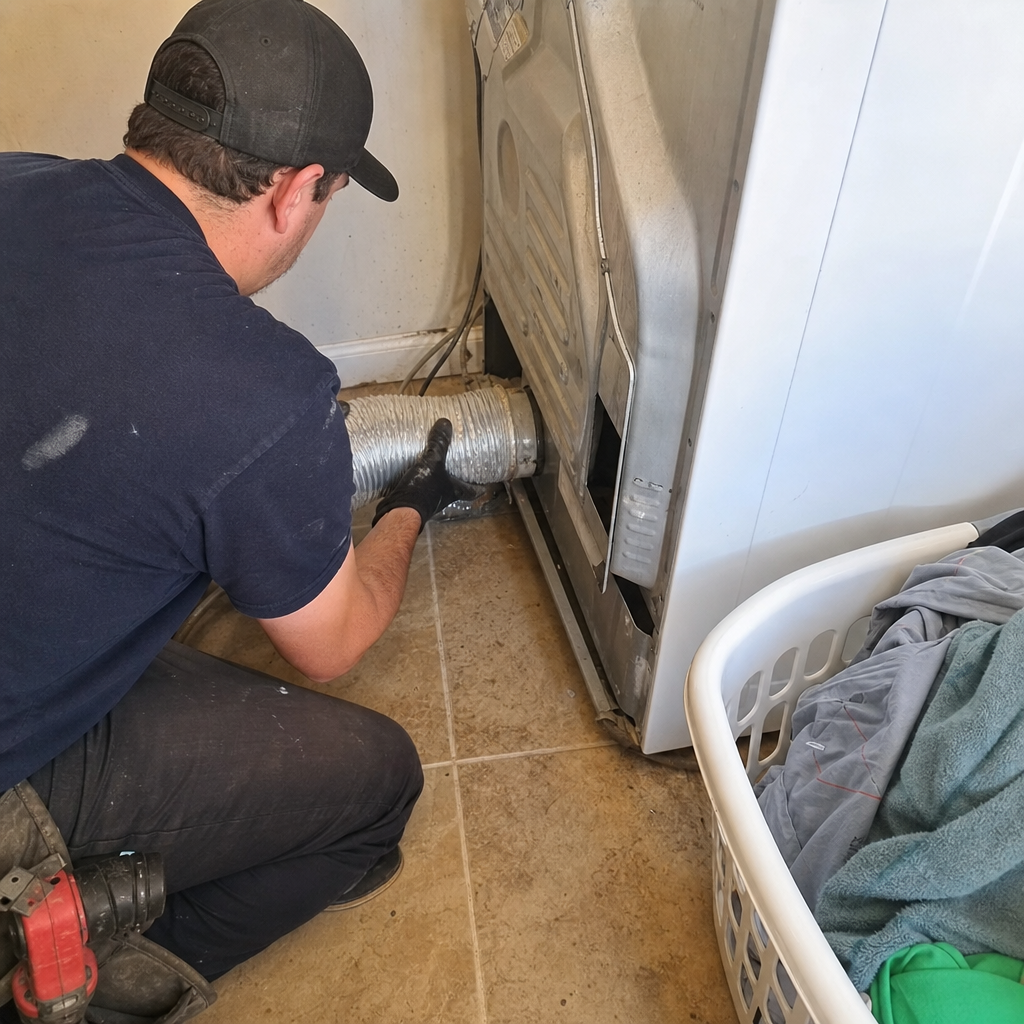
Cracked, missing, or improperly spec’d caps are an open invitation for pests and weather infiltration. We stock replacements sized for Boston’s common vent configurations and install them with proper clearances and sealing. A new cap with integrated bird guard, properly installed, eliminates a failure mode we see repeatedly on rural properties.
What happens when you call
- 1
A real person answersNo phone trees — you reach a local pro.
- 2
You get an upfront price rangeHonest numbers before anyone is dispatched.
- 3
A background-checked tech heads outLicensed & insured, dispatched right away.
- 4
You approve before work beginsNothing starts until you say go.
Trusted Brands We Service in Boston
We’re familiar with Honeywell, Aprilaire, and Guardsman ventilation and filtration products — the same premium systems many Boston homeowners have already invested in for their HVAC setups. This matters when we’re integrating dryer vent work with your broader indoor air quality strategy. We don’t sell equipment we don’t understand, and we stock common caps, guards, and transition fittings so Boston customers aren’t waiting on parts shipments. Our equipment lineup — Rotobrush, Nikro, and Abatement Technologies — represents professional-grade tools, not rental-grade alternatives that leave debris behind.
Common Dryer Vent Cleaning Problems We See in Boston Homes
- Agricultural debris bakes into resin-like blockages. Field dust and crop pollen accumulate during summer, then harden into deposits that standard brushes can’t dislodge during the long heating season. We encounter this on virtually every Boston property with exposed vent intake locations.
- Long, unsupported vent runs sag and collect lint. Rural properties with detached workshops or outbuildings often have 30–40 foot runs with improper slope or missing supports, creating permanent low spots where lint settles and moisture condenses.
- Original vent caps have failed or were never proper. Older Boston farmhouses and mid-century builds frequently have cracked plastic caps, missing dampers, or no protection against bird entry — all correctable in a single visit.
- DIY cleaning misses hidden blockages. Self-reliant homeowners clear the accessible lint trap and maybe the first few feet of duct, but miss the critical buildup past elbows, behind caps, or in sagging sections. The dryer still runs hot. The fire risk persists.
Pricing for Dryer Vent Cleaning in Boston, NY
A standard dryer vent cleaning in Boston runs $140–$200 for single-story homes with accessible termination points and runs under 15 feet. Longer rural vent systems — the 25–40 foot runs common on acreage properties with detached workshops — typically fall in the $220–$320 range due to additional agitation time and equipment setup. Bird guard installation adds $45–$85 depending on cap size and accessibility. Vent cap replacement runs $35–$75 for standard units, with heavy-duty Guardsman guards at the higher end.
What pushes costs higher: multiple story heights requiring roof access, significant debris requiring extended Rotobrush passes, collapsed sections needing repair before cleaning, or rodent-damaged duct requiring partial replacement. What doesn’t change: estimates are free, pricing is confirmed before work begins, and we don’t upsell services you don’t need. Call (855) 763-9868 — Charles will ask the right questions over the phone to give you an accurate range before scheduling.
We Also Serve Cities Near Boston
We regularly route from Boston to Hamburg, East Aurora, Lackawanna, and West Seneca — often scheduling multiple rural properties in a single day to minimize drive time and keep our rates fair. If you’re on the edge of our service area or unsure whether your property falls within it, call and we’ll confirm. We’ve yet to turn away a Boston-area homeowner for being too far out.
Serving Boston, NY — Our Local Coverage Area
We’re based in the Boston area and know this community well. Use the map below to see our service coverage — if you’re nearby, we can almost certainly help.
FAQs — Dryer Vent Cleaning in Boston
Boston’s surrounding agricultural fields load vent intakes with crop dust, pollen, and organic debris that suburban Buffalo properties simply don’t face, and the extended heating season bakes this material into harder deposits. The combination of elevated particulate intake and longer runtime months means Boston vents need more frequent professional attention — typically every 12–18 months versus 18–24 for city properties. Call (855) 763-9868 to schedule an inspection and we’ll assess your specific debris load.
Boston’s forced-air heating season runs from October through late April — often six-plus months — which means your dryer operates in a sealed, recirculating environment for more than half the year. Lint and debris that enters during the brief warm season gets continuously recirculated and compressed, accelerating blockage formation and increasing fire risk. Professional cleaning before heating season begins is the best preventive strategy; call (855) 763-9868 for fall scheduling.
Yes — rural Boston properties with open fields and mature tree lines see significantly higher bird and rodent intrusion rates than suburban areas, and a single nest can completely block exhaust flow and create a serious fire hazard. We install heavy-duty Guardsman bird guards that prevent entry without the frost-clogging problems of cheap screen alternatives. Call (855) 763-9868 and we’ll check your current cap configuration during your free estimate.
Absolutely — we specialize in the 30–40 foot runs common on Boston acreage properties, using professional-grade Rotobrush and Nikro equipment that maintains suction and agitation power over extended distances. Charles evaluates slope, support, and termination design personally to ensure the full run gets cleared, not just the accessible portions. Call (855) 763-9868 to discuss your specific layout.
DIY cleaning can handle surface lint near the dryer connection but consistently misses the hardened agricultural debris deposits and hidden sags that define Boston’s toughest blockages — we’ve verified this on dozens of properties where homeowners called us after their own efforts failed. The fire risk persists when the vent looks clear but airflow remains restricted past the first few feet. Professional inspection with camera verification is the only way to confirm complete clearance; call (855) 763-9868 for an honest assessment.
Written by Charles Rodriguez, Owner at Pinnacle Air Duct Cleaning Service Greater Buffalo, serving Boston and Erie County’s rural snowbelt since 2016.