
Duct Sealing Cost in Buffalo, NY: What You’ll Actually Pay Based on Your Home’s Duct System
Our How Much Does Duct Repair & Sealing Cost? (2026 Price Guide) — Buffalo, NY explains why duct sealing in Buffalo typically costs between $800 and $2,400 for most residential homes, with smaller partial-seal jobs starting around $400 and extensive full-system sealing in older homes reaching $3,000 or more. The wide range reflects something most flat-rate pricing guides ignore: Buffalo’s pre-1950 housing stock contains retrofitted duct systems that are far harder to access and properly seal than the original-design systems found in newer markets. Call (855) 763-9868 for a free on-site assessment — Charles handles every job personally and will tell you exactly which sections can be reached and sealed durably.
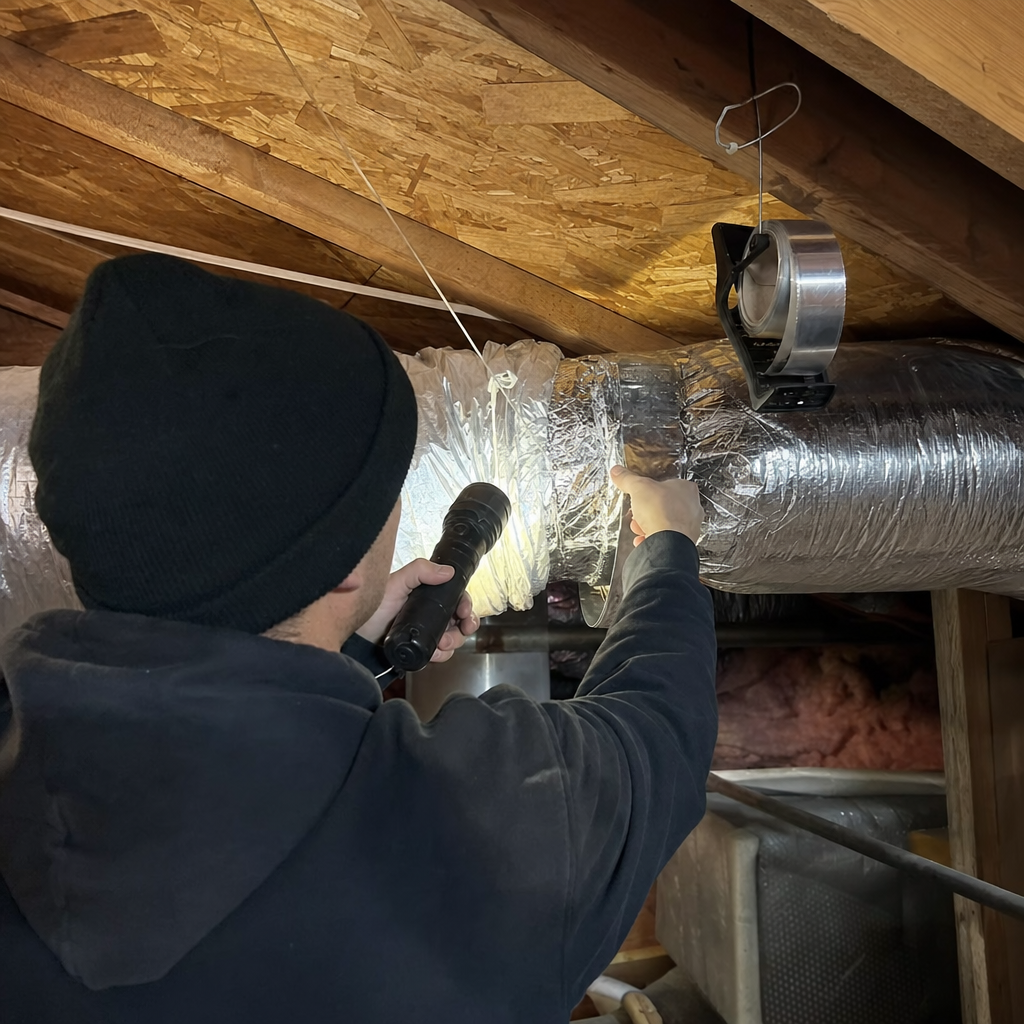
Buffalo furnaces run six months a year. If your ducts are leaking 20–30% of conditioned air through joints in an unheated crawl space — which is common in retrofit systems — you’re paying to heat your crawl space all winter. In a heating market this punishing, duct leakage isn’t an efficiency footnote. It’s a compounding cost that separates homes with tight ductwork from homes that hemorrhage conditioned air from October through April.
Why Buffalo’s Housing Stock Makes Duct Sealing Cost More Variable Than National Guides Suggest
National cost averages for duct sealing assume accessible, standardized ductwork. That assumption collapses the moment you crawl through a Buffalo basement.
Our city’s housing stock is overwhelmingly pre-1950 — Victorian, Colonial Revival, and early 20th-century working-class homes in neighborhoods like Allentown, South Buffalo, Black Rock, and Riverside. These were built for coal-fired boilers and steam radiators, then retrofitted with forced-air duct systems decades later. Those retrofitted ducts were shoehorned through finished walls, crawl spaces, and closets never designed for them, producing narrow, irregular runs with excessive joints and hard-to-reach dead-end sections.
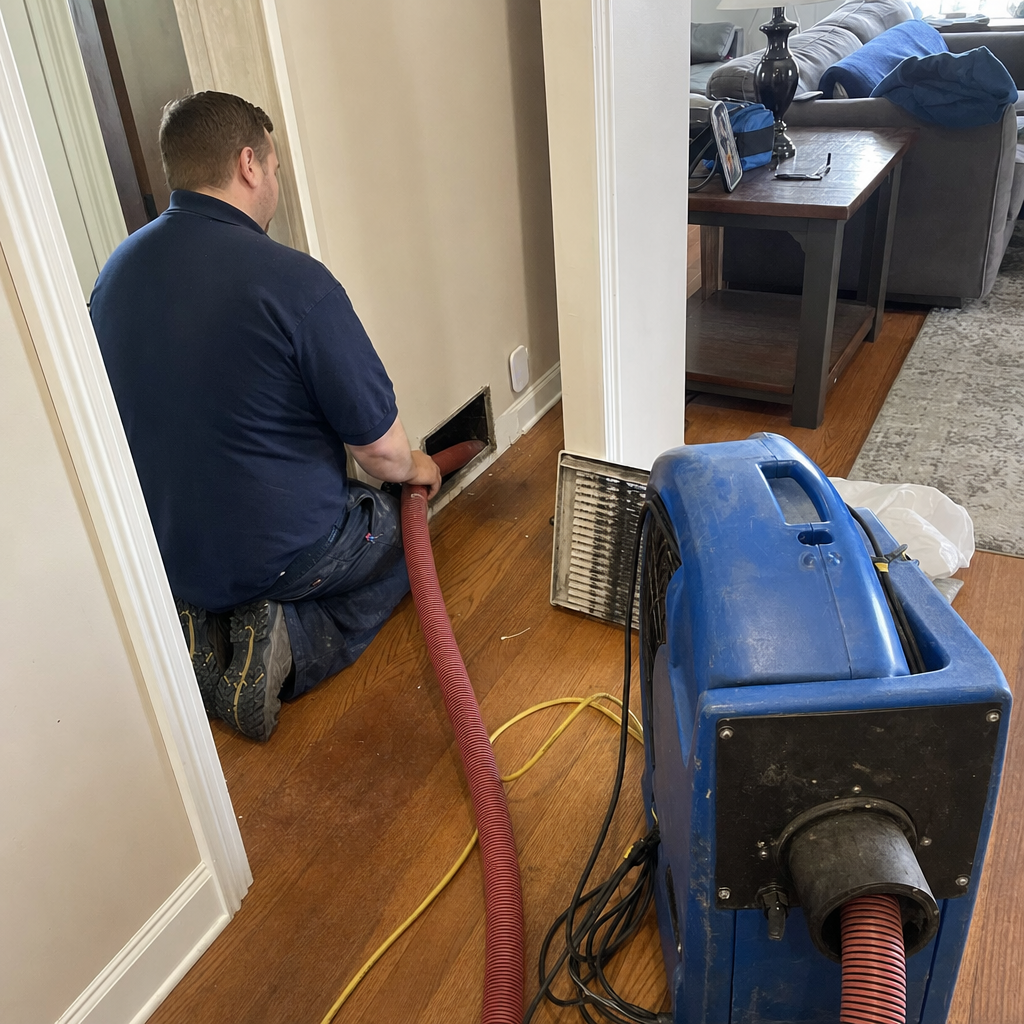
We’ve pulled equipment into homes where ductwork was routed through bricked-up coal-chute spaces, around cast-iron radiator pipes, and into closet walls with hand-cut openings. Sections that have never been professionally cleaned — let alone sealed — and that require non-standard flexible equipment to reach at all. The Rotobrush and Nikro systems we run aren’t rental-grade tools; they’re the same professional-grade equipment industrial contractors use, and we need every bit of that flexibility for Buffalo’s older housing stock.
This matters for your Affordable Duct Repair & Sealing in Buffalo, NY cost because labor drives the price. A duct system with accessible basement trunk lines and standard-register drops takes a fraction of the time to seal properly. A retrofit system snaking through three floors of finished construction? That’s a different job entirely, and any technician who quotes it flat-rate without looking is either padding the price or planning to skip the unreachable sections.
What We Actually Find When We Inspect Buffalo Duct Systems
After eight years focused on indoor air quality in the Greater Buffalo area, we’ve developed a clear picture of what drives sealing complexity:
- Coal-chute retrofits: Ducts routed through former coal delivery chutes, now bricked up and partially insulated, with joints that have settled and separated over decades
- Closet-wall penetrations: Hand-cut openings in closet drywall with flex-duct connections that have degraded from Lake Erie humidity cycling
- Uninsulated crawl space runs: Metal duct sections that expand and contract through Buffalo’s temperature swings, loosening mastic and tape bonds
- Dead-end register drops: Short duct sections capped or abandoned during renovations, still connected to the main trunk and leaking continuously
Each of these requires different access strategy, different sealing material, and different labor allocation. Charles provides an honest scope assessment on-site: if a section can’t be reached safely or sealed durably, he says so rather than charging for incomplete work.
Mastic vs. Metallic Tape: What You’re Paying For and When Each Makes Sense
A significant portion of your duct sealing cost comes down to material choice and application method. Most Buffalo homeowners we meet don’t know the difference until we show them — and the difference matters for longevity in our climate.
Mastic sealant is a thick, paste-like compound brushed or sprayed onto joints and seams, then cured to a flexible, durable seal. It’s the standard for permanent sealing of metal duct joints, especially in unconditioned spaces where temperature cycling is severe. Application is slower — brushwork in tight spaces, cure time before the system can run — but the seal lasts 15–20 years when applied to clean, properly prepared surfaces. In Buffalo’s extended heating season, with furnaces cycling continuously for months, that durability difference is worth the labor premium.
Metallic tape (properly, UL-181B-FX listed foil tape, not the hardware-store variety) is faster to apply and appropriate for accessible joints in conditioned spaces with minimal temperature stress. It’s also useful for temporary seals or as a reinforcement over mastic in high-vibration sections. The labor cost is lower, but tape alone on older flex-joint retrofits doesn’t hold over time — the adhesive degrades with Buffalo’s humidity swings, and the tape peels from dust-contaminated surfaces.
Here’s what the material and labor breakdown typically looks like for Buffalo homes:
| Service Component | Typical Cost Range |
|---|---|
| Partial sealing (accessible basement trunk + main drops only) | $400 – $800 |
| Standard full-system sealing (single furnace, accessible layout) | $800 – $1,400 |
| Complex retrofit sealing (multiple access points, crawl space work) | $1,400 – $2,400 |
| Extensive sealing + minor duct repair (separated joints, small section replacement) | $2,000 – $3,000+ |
| Mastic application (per joint, labor-intensive locations) | $45 – $85 per joint |
| Metallic tape reinforcement (conditioned-space, accessible joints) | $25 – $45 per joint |
| Post-sealing airflow verification | $75 – $150 |
The sequencing point most competitors don’t mention: sealing is most cost-effective immediately after cleaning, when the interior of the duct is clear and the tech can visually confirm joint condition. We’ve arrived at jobs where a homeowner paid for sealing six months prior, but the joints were sealed over accumulated debris — the seal failed, and the debris trapped moisture from lake humidity, accelerating corrosion. At Pinnacle, we assess whether cleaning should precede sealing, and we price the combination honestly rather than treating them as separate upsells.
How Buffalo’s Climate Turns Duct Leakage Into a Bigger Cost Than Short-Season Markets
Furnaces in Buffalo typically run nearly continuously from October through April — six-plus months — driven by persistent lake-effect cloud cover and snowfall that suppresses temperatures far longer than inland cities at similar latitudes. That extended blower runtime loads duct interiors with dust and allergens at an accelerated annual rate, while lake humidity creates seasonal condensation risks inside older ductwork that lacks adequate insulation.
Here’s the math that matters: a 20% duct leakage rate in a Buffalo home means 20% of every heating dollar is conditioning unoccupied space. In a market where furnaces run 180+ days annually, that leakage compounds far more than in, say, a Kansas City winter of 90 heating days. A homeowner in Buffalo with leaky retrofitted ducts might spend $400–$600 in wasted heating annually — meaning even a $1,800 sealing job pays back in 3–4 years, with improved comfort and air quality layered on top.
Lake Erie’s proximity sustains elevated ambient humidity even in winter, raising the risk of mold colonization inside ductwork of the city’s many older, under-insulated homes. When conditioned air leaks into cold wall cavities or crawl spaces, the temperature differential creates condensation points. Sealed ducts don’t just save money — they reduce the moisture migration that feeds mold growth in Buffalo’s specific humidity environment.
This specific pairing of extreme heating-season length and lake-sourced moisture is not replicated in neighboring markets like Rochester, which draws lake effect from Ontario under different moisture dynamics. Buffalo’s duct sealing ROI is genuinely higher — but only if the technician can actually reach and properly treat the problem joints.
What Separates a Proper Duct Sealing Job From a Surface Treatment
We’ve been called in after other work where registers were removed, tape was applied to visible trunk connections, and the system was pronounced “sealed.” The homeowner still had cold rooms, still had high bills, still had dust accumulation. The unreachable joints — the ones in the wall cavities, the crawl space turns, the coal-chute splices — were never touched.
A proper sealing job follows a sequence we’ve refined over eight years:
- System mapping: We identify every trunk line, branch, and register drop, including abandoned or capped sections that still leak
- Access strategy: We determine which sections can be reached through existing openings, which require temporary access cuts, and which are structurally inaccessible
- Surface preparation: Joints are cleaned of dust and debris — mastic won’t bond to contamination, and tape won’t adhere to oil or moisture
- Material selection per location: Mastic for unconditioned-space metal joints and high-stress connections; tape reinforcement where appropriate; hybrid application where vibration or settlement is likely
- Post-seal verification: We run the system and verify airflow improvement at registers, checking for balanced distribution and reduced blower strain
Our Abatement Technologies equipment includes airflow measurement tools that let us quantify improvement — not just assert it. And because Charles handles every job personally, the person who mapped your system is the same one who sealed it and verified the results.
When Duct Sealing Isn’t the Right Investment — And What We Recommend Instead
Not every duct system is worth sealing. We’ve walked into Buffalo homes where the retrofitted ductwork is so poorly designed — excessive runs, no dampers, crushed flex sections — that sealing would improve efficiency marginally while leaving fundamental distribution problems unaddressed. In those cases, we’ll tell you. We’ve also found systems where sections have rusted through from decades of condensation, where sealing is temporary and section replacement makes more sense.
Our Duct Repair & Sealing service scope includes honest assessment of whether repair, sealing, or partial replacement is the right path. We don’t sell sealing to homeowners who need redesign, and we don’t push full replacement when targeted sealing will solve the problem. “I’ve been in a lot of duct systems in this city. I’ll tell you exactly what’s in yours.” — that’s the accountability Charles built this business on, and it’s why 160 homeowners rated us 4.9 stars.
We’re also familiar with Honeywell and Aprilaire systems — if you’ve invested in premium HVAC or filtration equipment, we ensure our sealing work maintains compatibility with your existing controls and airflow requirements.
FAQs
Most Buffalo homeowners pay between $800 and $2,400 for professional duct sealing, with smaller partial jobs around $400 and complex retrofits in older homes reaching $3,000 or more. The range reflects accessibility — homes with basement trunk lines and standard drops cost less than homes with ducts routed through finished walls, crawl spaces, and former coal chutes. Call (855) 763-9868 for a free estimate; Charles assesses every job in person before pricing.
Sealing is almost always cheaper than replacement — typically 30–50% of the cost of full duct replacement — but it’s only the right choice if the ductwork is structurally sound and accessible. We recommend sealing for separated joints, small gaps, and minor corrosion; we recommend section replacement when ducts are crushed, extensively rusted, or so poorly routed that sealing won’t fix distribution problems. After inspecting your system, we’ll tell you which path actually solves your problem.
Yes, and it’s often the most cost-effective approach. Sealing immediately after cleaning means joints are visible, surfaces are prepared for proper mastic adhesion, and we can verify seal integrity without debris obscuring the work. Scheduling both together also reduces trip charges and total labor time. We frequently bundle cleaning and sealing for Buffalo homeowners who want the full improvement in efficiency and air quality.
Signs of significant duct leakage include rooms that never reach temperature, excessive dust near registers, unusually high heating bills, and a furnace that runs continuously without satisfying the thermostat. In Buffalo’s older housing stock, we also see condensation in ductwork and musty odors from conditioned air leaking into wall cavities. If you’re experiencing two or more of these, a professional inspection is warranted — and at Pinnacle, that inspection is free.
Get an Honest Assessment of Your Buffalo Home’s Duct Sealing Needs
Buffalo’s heating season is too long and too expensive to tolerate leaky ducts. If your system was retrofitted into a pre-1950 home — and most in this city were — the accessibility challenges are real, but so are the savings when sealing is done right. Charles Rodriguez, Owner & Lead Technician at Pinnacle Air Duct Cleaning Service Greater Buffalo, handles every job personally with the Best Duct Repair & Sealing in Buffalo, NY equipment, honest scope assessment, and the kind of post-job walkthrough where you’ll see exactly what was sealed and why.
Call (855) 763-9868 today for a free estimate. We’ll inspect your system, identify the reachable joints, and give you a straight price for work that actually holds up through Buffalo’s winter.
Written by Charles Rodriguez, Owner & Lead Technician at Pinnacle Air Duct Cleaning Service Greater Buffalo, serving Buffalo, NY.